Transforming Dharmapasha into an Arsenic-Safe Upazila: A Community-Led WASH Success Story
Access to water in Bangladesh has improved dramatically over the years, yet the challenge of safe drinking water remains critical—especially in arsenic-prone areas. In Dharmapasha Upazila of Sunamganj district, arsenic contamination, poor sanitation, and limited hygiene practices posed serious public health risks.
Between January 2024 and December 2025, Asia Arsenic Network (AAN), with support from UNICEF and the Department of Public Health Engineering (DPHE), implemented an ambitious WASH initiative aimed at transforming four unions of Dharmapasha into Arsenic Safe Unions through community-led and equity-based approaches.
Why Dharmapasha?
Dharmapasha lies in the haor belt of northeastern Bangladesh, an area highly vulnerable to arsenic contamination, flooding, and water table fluctuations. Although most households had access to water sources, many were unsafe or untested, and sanitation coverage was alarmingly low.
A baseline Community Situation Analysis (CSA) revealed:
- 11.8% of water points were arsenic contaminated
- 37% of tube wells were untested
- 17.36% of households practiced open defecation
- 86.4% of households lacked handwashing facilities
These findings shaped a targeted, data-driven response.
A Community-Centered Approach to Safe Water
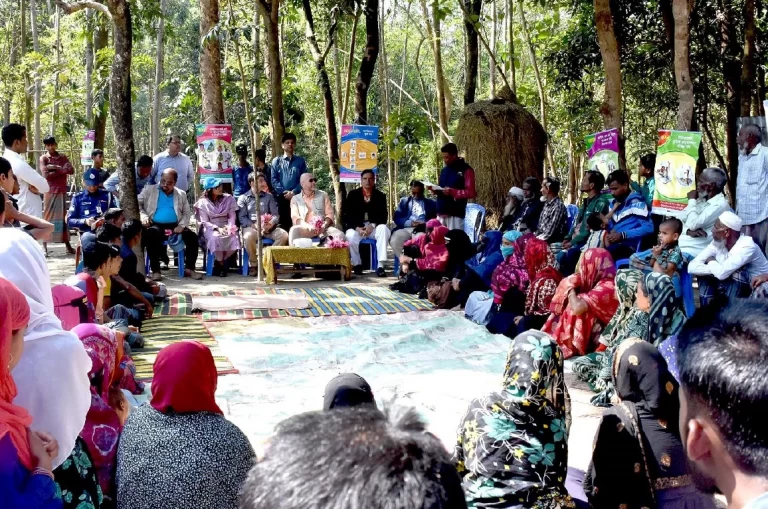
At the heart of the project was community empowerment. AAN worked closely with 217 Community-Based Organizations (CBOs) across Dharmapasha Sadar, Selborash, Paikurati, and Joysree unions.
Key interventions included:
- Equity-based site selection for water points, prioritizing poor and underserved households
- Training 800 caretakers on operation & maintenance (O&M) and climate-resilient Water Safety Plans (WSP)
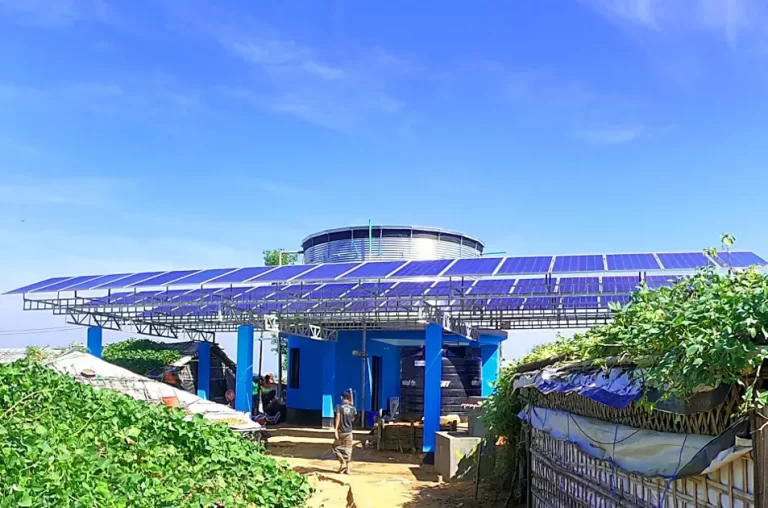
- Rehabilitation of 52 inactive arsenic-safe water points, a cost-effective alternative to new installations
- Innovative conversion of inactive deep tube wells using compressors to overcome low water tables
As a result, 442 functional arsenic-safe water points are now serving communities sustainably.
Sanitation and Hygiene: Driving Behavior Change
Improving infrastructure alone isn’t enough—behavior change was a major focus of the project.
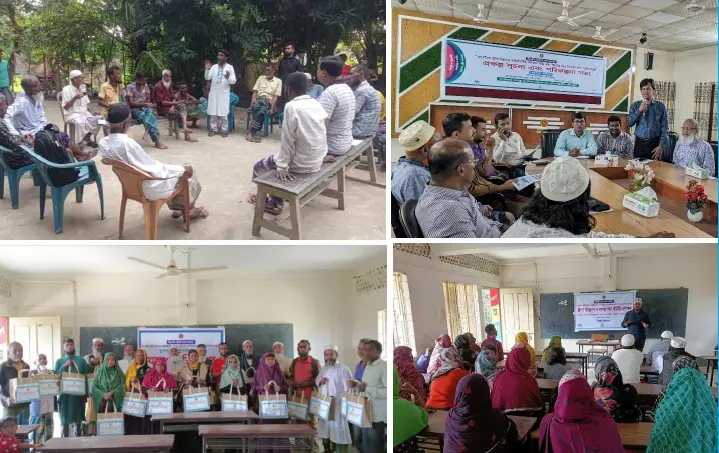
Through 1,864 CBO meetings and over 7,000 courtyard sessions, communities were mobilized to:
- Install 3,731 new latrines
- Repair 13,875 unimproved latrines
- Install 17,635 handwashing devices
- Promote safe hygiene and menstrual hygiene management
More than 39,000 people participated in Water Safety Plan orientations, ensuring water remains safe from source to consumption.
Remarkable Outcomes at a Glance
- 1,11,427 people engaged through community planning and action
- 3 out of 4 unions officially declared Arsenic Safe and Open Defecation Free (ODF)
- 3,217 families shifted from unsafe to arsenic-safe water sources
- 90%+ achievement rate across most project targets
Joysree Union is close to achieving arsenic-safe status, with remaining gaps clearly identified and addressed in the project roadmap.
Strong Partnerships, Lasting Impact
The project’s success was driven by close coordination with:
- DPHE and Local Government Institutions
- Union and Upazila WatSan Committees
- UNICEF, providing technical guidance and monitoring support
Regular progress meetings, field visits, and transparent monitoring ensured accountability and continuous improvement.
Looking Ahead
The Dharmapasha experience demonstrates that arsenic mitigation and WASH improvements are achievable when communities lead the change. By combining technical solutions, behavior change communication, and strong local governance, the project has laid a strong foundation for sustainable safe water and sanitation.