Transforming Lives Through Safe Water: A Year of Progress in Dharmapasha
In the remote and arsenic-affected region of Dharmapasha in Sunamganj, Bangladesh, access to safe drinking water is not just a matter of convenience—it’s a matter of survival. The Asia Arsenic Network (AAN), in partnership with UNICEF and the Department of Public Health Engineering (DPHE), has taken significant strides in 2023–2024 toward turning this challenge into a success story.
Why This Project Matters
Despite over 98% of Bangladesh’s population having access to improved water sources, only 42.6% of households enjoy truly safe drinking water, free from contaminants like arsenic and E. coli. In regions like Dharmapasha, these figures are worse. Arsenic contamination remains one of the most critical public health concerns, threatening the lives of the most vulnerable.
The Mission: Arsenic-Safe Unions by 2025
Launched in December 2023, the AAN-led initiative aims to transform four high-risk unions—Dharmapasha Sadar, Joysree, Selborash, and Paikurati—into “Arsenic Safe Unions” by the end of 2025. The project focuses on three key pillars:
- Equity-based site selection for water sources
- Community-led sanitation and hygiene promotion
- Sustainable operation and maintenance (O&M) of water systems
Community First: From Assessment to Action
AAN’s success has stemmed from its community-centric approach. Over 111,000 villagers were engaged in a detailed Community Situation Analysis (CSA), which mapped out water quality, sanitation infrastructure, and hygiene behaviors. The data revealed:
- 17.6% of households still practice open defecation.
- Only 9.8% of households have handwashing facilities with soap.
- More than 48% of tubewells are either untested or contaminated.
Based on these findings, 217 Community-Based Organizations (CBOs) were formed, and over 3,400 meetings helped update actionable Community Action Plans (CAPs).
Equity in Action: Smarter Site Selection
Using GIS mapping and community feedback, AAN identified and proposed 609 new water points. The equity-based site selection approach ensures that the most underserved communities receive safe water access first, replacing the traditional “equal distribution” method with a needs-driven model.
Real Results, Real Impact
Here’s a snapshot of what AAN and its partners have achieved in just the first year:
- 432 new latrines installed, and 619 old ones upgraded
- 991 handwashing devices implemented in homes
- 36 non-functional but arsenic-safe water points rehabilitated, saving massive costs over new installations
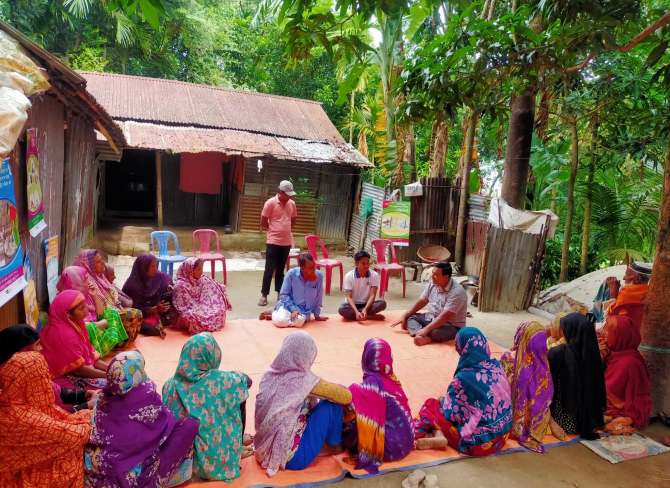
- 31,000+ people reached through courtyard sessions on arsenic risks, hygiene, and water safety
In addition, four Water Safety Plan (WSP) corners were set up across union offices, giving villagers a way to test their own water sources affordably and regularly.
Celebrating Awareness: Events That Made a Difference
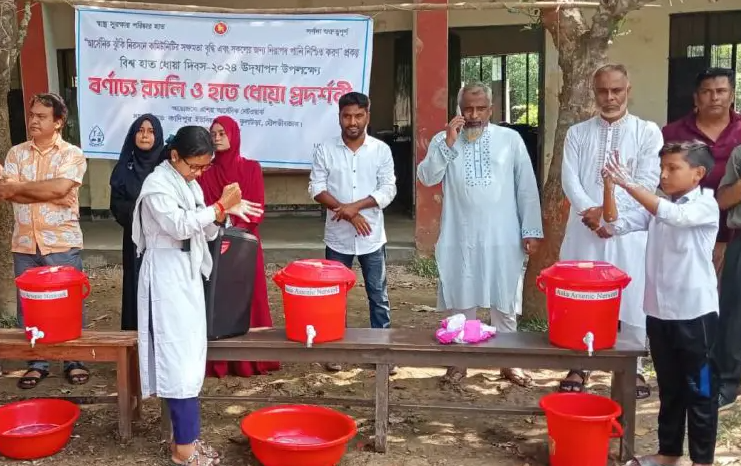
From World Water Day to Global Handwashing Day, AAN used public events to spread awareness, particularly among school children, women, and community leaders. Demonstrations, storytelling, and hygiene games made learning fun and impactful.
Final Thoughts
The Dharmapasha WASH Project is more than just an infrastructure initiative. It’s a blueprint for how equity, innovation, and community engagement can come together to solve public health crises. With continued collaboration between local governments, donors, and residents, AAN is turning the tide against arsenic and laying the foundation for a healthier future in rural Bangladesh.
For a detailed breakdown of project activities, achievements, and future plans, refer to the full report, attached to this blog post.