Building Arsenic-Safe Communities in Kulaura
In a region where clean drinking water cannot be taken for granted, the Asia Arsenic Network (AAN), in partnership with UNICEF and the Department of Public Health Engineering (DPHE), has taken bold steps to transform communities in Kulaura Upazila, Sylhet, into arsenic-safe and open defecation-free zones. This past year, the WASH project (Water, Sanitation and Hygiene) has made remarkable progress in improving water safety, sanitation, and hygiene across four targeted unions—Kulaura, Routhgaon, Kadipur, and Bhukshimoil.
Why This Project Matters
Although Bangladesh has made notable strides in water access, nearly 58% of the population still lacks safe drinking water. Arsenic and E. coli contamination remain critical public health threats. In Kulaura, these issues are compounded by geographic challenges like hilly terrain, flash floods, and remote hoar regions. AAN’s project tackles these hurdles head-on by fostering sustainable, community-driven water and sanitation solutions.
Project Highlights from 2023–2024
1. Community-Led Action and Capacity Building
- Over 84,000 residents participated in Community Situation Analysis (CSA) and planning activities.
- 208 Community-Based Organizations (CBOs) were formed, holding 832 meetings to discuss local water and sanitation needs.
- More than 400 community leaders received hands-on training on water safety, arsenic awareness, and hygiene practices.
2. Improving Water Access and Quality
- 12 previously inactive arsenic-safe tubewells were rehabilitated, benefiting 815 people.
- 454 new safe water points were identified to meet 100% coverage goals.
- 172 caretakers were trained in water point maintenance and water safety planning (WSP).
- WSP corners were set up in all 4 unions to enable affordable local arsenic testing.
3. Transforming Sanitation and Hygiene
- 100 new hygienic latrines installed and 479 unimproved ones upgraded.
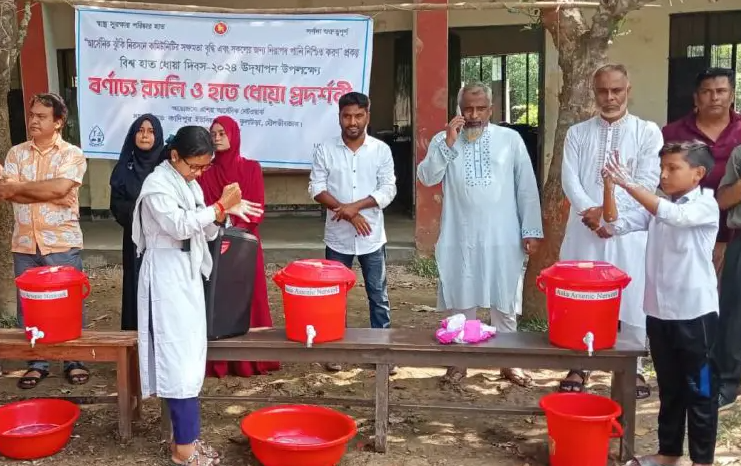
- 718 handwashing stations set up across households.
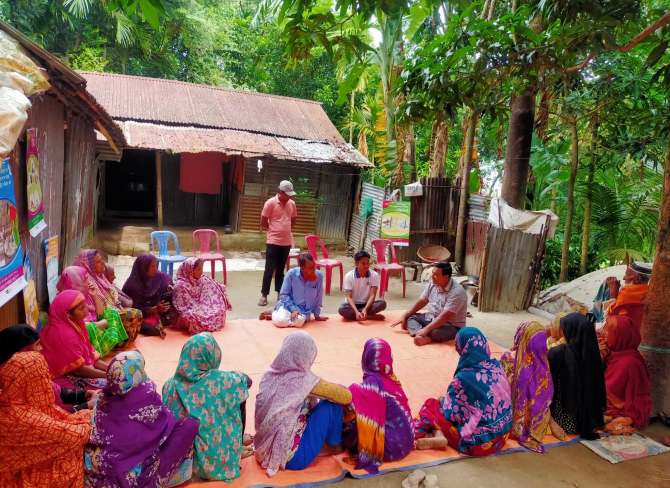
- Over 37,000 villagers engaged in courtyard sessions discussing hygiene, sanitation, arsenic risks, and menstrual hygiene.
4. Engaging Stakeholders and Promoting Awareness
- Multiple coordination meetings held with DPHE, LGIs, UNICEF, and other stakeholders.
- Celebrations for World Water Day and Global Handwashing Day mobilized school children, health professionals, and local leaders to reinforce the message: Clean water and hygiene save lives.
Challenges Faced
While the project’s progress is commendable, several barriers remain:
- Inaccessible terrain and frequent flooding limit infrastructure development.
- Water quality testing facilities are limited in remote areas.
- Arsenic contamination in deep aquifers and a falling water table present ongoing threats.
However, with strategic planning and continued collaboration, these challenges are being addressed through climate-resilient infrastructure (like double-platform tubewells), improved data sharing, and localized training.
Looking Ahead: The Vision for 2025
The ultimate goal is to declare all four target unions as Arsenic-Safe Unions by the end of 2025. This vision is grounded in equity, sustainability, and grassroots involvement. As part of the second year of implementation, activities like wall painting, billboard installation, and full community certification are planned.
Final Thoughts
The AAN-UNICEF WASH project is more than just an initiative—it’s a lifeline for thousands living under the threat of unsafe water. By empowering communities, training local caretakers, and fostering transparent collaboration with local governments, this project is setting a blueprint for sustainable development in rural Bangladesh.
For a detailed breakdown of project activities, achievements, and future plans, refer to the full report, attached to this blog post.