Improvement and Rehabilitation of Existing Water Supply Systems in Rohingya Refugee Camp No. 8E in Cox’s Bazar
Since 2017, the arrival of over 700,000 Rohingya refugees into Cox’s Bazar has created one of the largest and most densely populated humanitarian settings in the world. Among the many urgent needs, access to safe and reliable drinking water has remained one of the most critical challenges.
In response, the Asia Arsenic Network (AAN), in partnership with UNICEF Bangladesh and with technical support from DPHE, implemented a transformative water supply project in Rohingya Refugee Camp 8E. This initiative has significantly improved access to safe water while establishing a sustainable and community-managed system designed for long-term resilience.
The Challenge: Limited and Unsafe Water Access
In the early stages of the emergency response, shallow tubewells were rapidly installed across the camps. However, these sources quickly became unreliable due to groundwater depletion and contamination risks. Even with the introduction of deeper tubewells, access remained insufficient.
In Camp 8E, the situation was particularly severe:
- Average water consumption was only 7 liters per person per day, far below the 20-liter standard
- Most households relied on hand pumps or distant water points
- Long waiting times and difficult terrain made water collection challenging
- Many water points were either non-functional or at risk of contamination
These issues disproportionately affected women, children, the elderly, and persons with disabilities, who faced greater barriers in accessing safe water.
The Solution: A Climate-Resilient Piped Water System
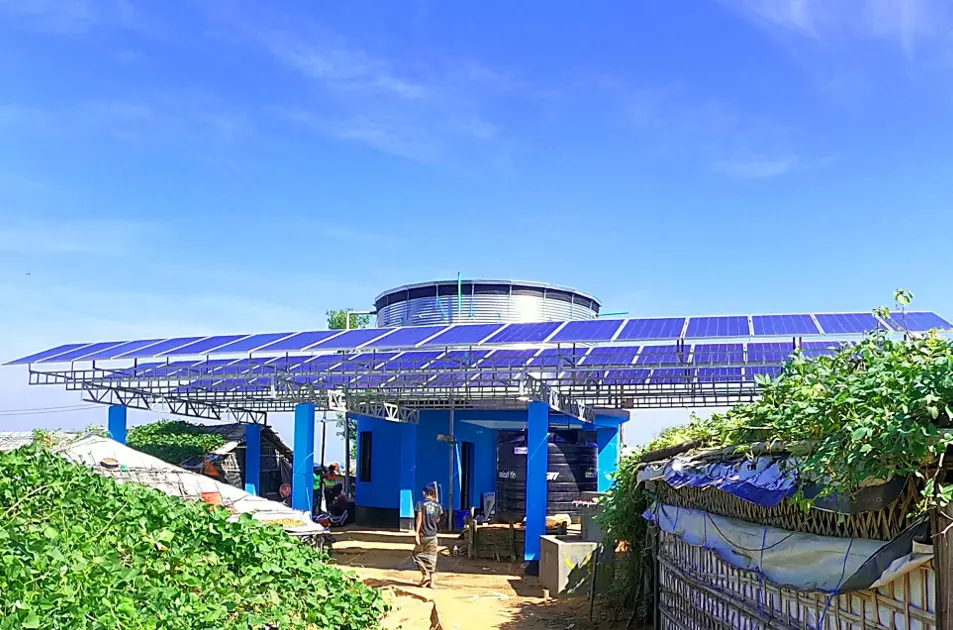
To address these challenges, AAN implemented a comprehensive, solar-powered piped water supply system across three Water Distribution Zones (WDZ 8E.02, 8E.03(A), and 8E.04).
Key Infrastructure Highlights
- Deep Production Wells:
Boreholes reaching depths of 250–300 meters ensure access to safe and reliable groundwater - Solar-Powered Pumping Systems:
Each system operates using renewable energy, producing approximately 15,000 liters per hour - Storage Reservoirs:
Three reservoirs with 90,000-liter capacity each ensure consistent supply and pressure - Distribution Network:
- حوالي 3,000 meters of পাইপলাইন
- 42 water collection points
- 168 tap stands for easy community access
Beyond Water: Built for Safety and Resilience
This project goes beyond water supply by integrating critical safety and resilience features:
Cyclone-Resilient Infrastructure
Pump houses are designed to double as cyclone shelters, offering safe refuge during extreme weather events—especially for vulnerable groups.
Firefighting Facilities
Each water point includes fire hose connections, enabling rapid response to fire emergencies—an essential feature in densely populated camps.
Ensuring Water Quality and Safety
Water safety was a top priority throughout the project:
- Tested by DPHE central laboratory
- Fully compliant with Bangladesh national standards and WHO guidelines
- 3,413 field-level tests conducted (bacteriological, chlorine, and physicochemical)
- Equipped with automatic chlorination systems
This ensures that every drop of water reaching the community is safe for consumption.
Community Ownership: The Key to Sustainability
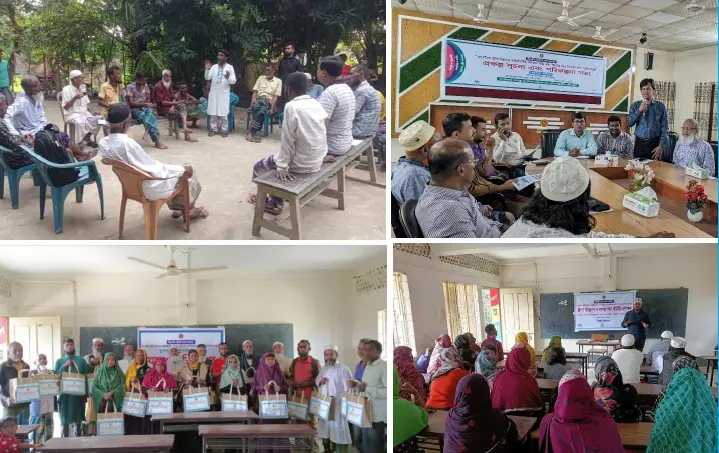
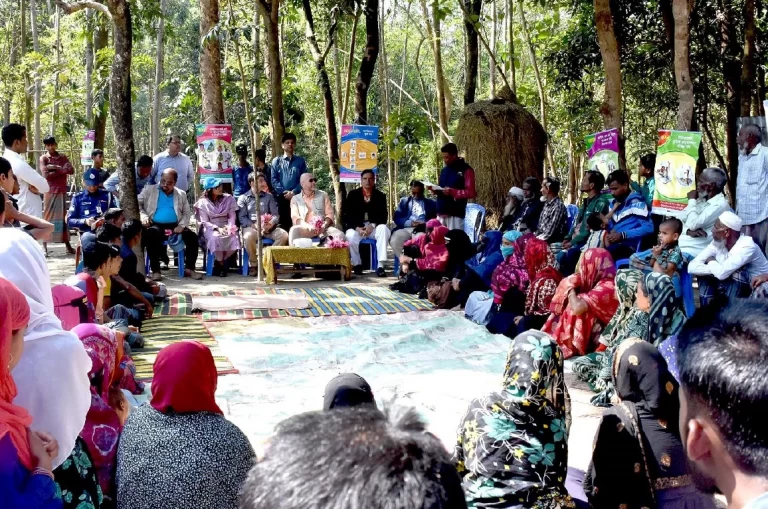
A major strength of this project is its strong focus on community engagement:
- Rohingya caretakers trained in system operation and maintenance
- Formation of:
- 3 WASH Management Committees
- 168 Tap Stand Committees
- Active involvement of Majhi representatives
This approach ensures long-term sustainability, accountability, and smooth operation of the systems.
Impact at a Glance
- Serving approximately 17,000 people
- Improved access to safe water for 6,370+ women
- Reduced collection time and physical burden
- Enhanced public health and hygiene conditions
- Strengthened disaster preparedness and response
A Milestone Achievement
The project was officially inaugurated on 29 October 2020, with participation from government officials, UNICEF representatives, AAN leadership, and partner organizations.
The system stands today as a model for sustainable, scalable water supply solutions in humanitarian settings.
Looking Ahead
This intervention demonstrates that even in the most challenging environments, it is possible to deliver safe, reliable, and equitable water services through innovation, strong partnerships, and community ownership.